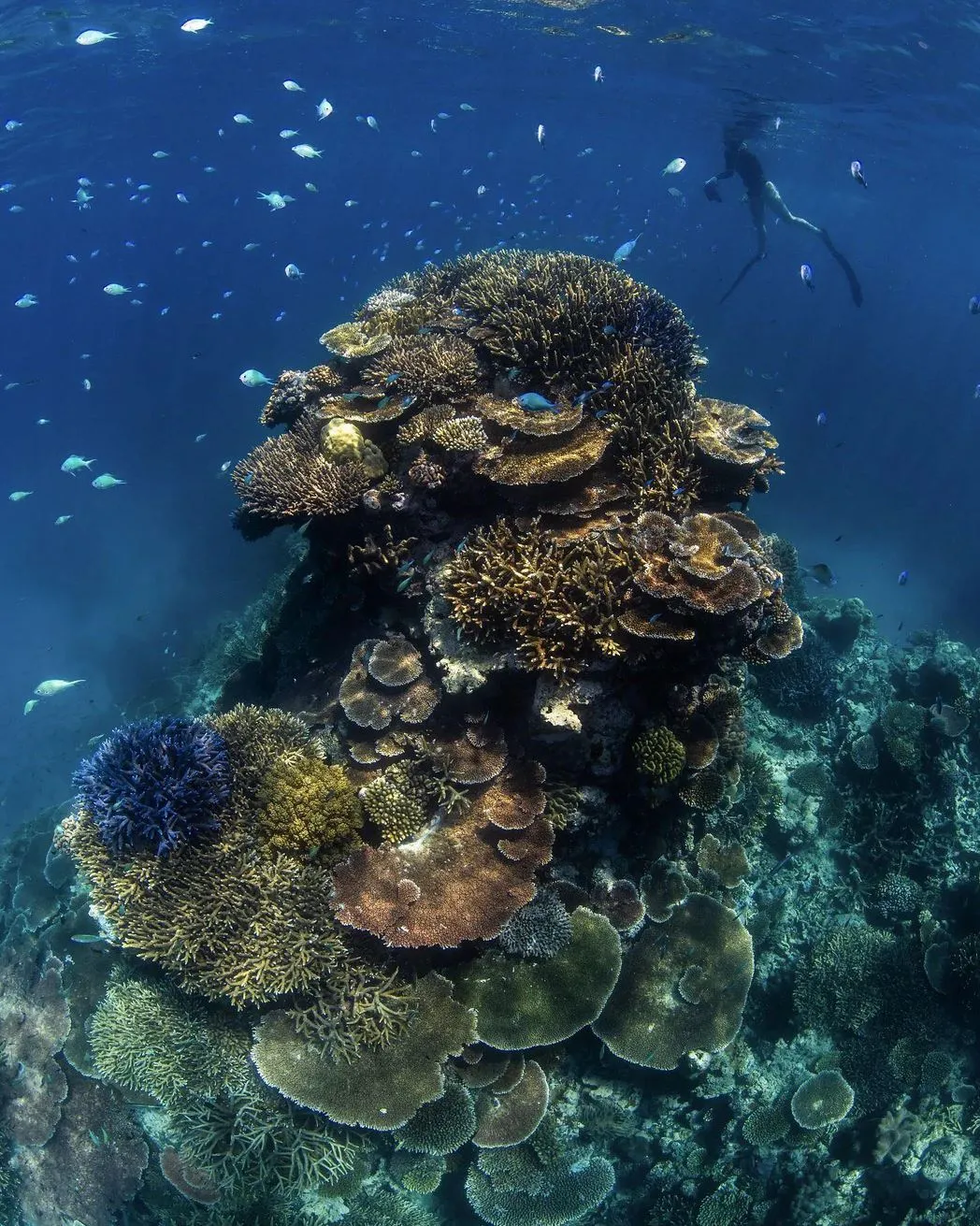
The question: What is the rarest thing in the Great Barrier Reef? usually gets people’s imagination going, but out in this vast World Heritage Listed Site, it’s a bit of a tricky one – like trying to catch a photo of a young oarfish with its super-thin dorsal fin just before it disappears into the blue. Years of running trips from Cairns Esplanade, Port Douglas, and Cape Tribulation have taught me that the reef has a knack for hiding the good stuff way out in the Coral Sea.
You can easily spot colourful reef fish by the bucket load, but the creatures that marine biologists get all excited about? Those are where the real stories come from. These are the sightings that have reef guides swapping stories over a cold one on the back of the boat, comparing notes like old mates who’ve been at it for years.
Where The Real Long-Odds Creatures Lurk
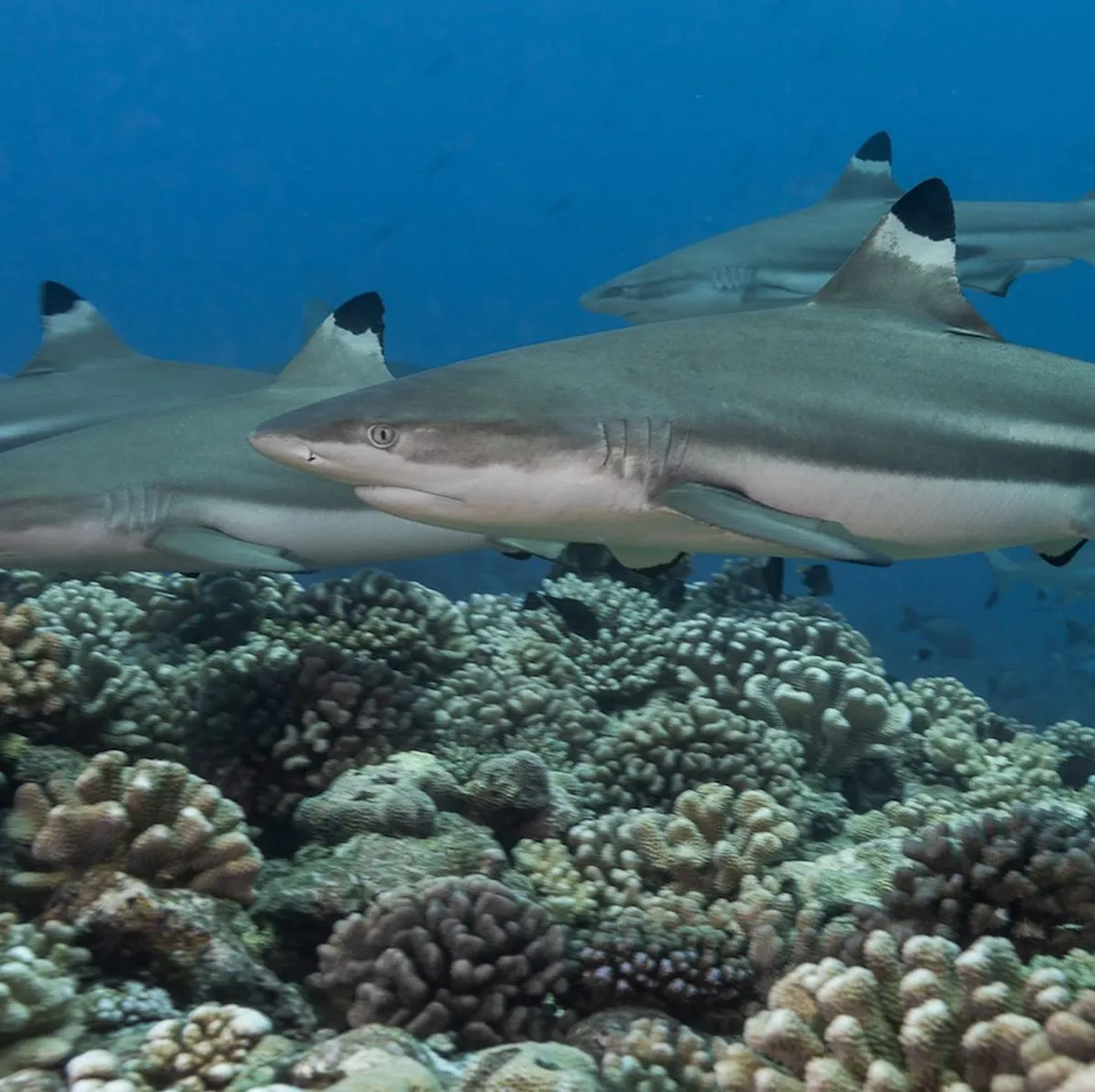
Most people snorkel the same few spots in the Marine park and can’t figure out why they didn’t see anything out of the ordinary. But the rarest of the rare tend to hang out in the harder to get to places – the Ribbon Reef Canyons, the deep drop-offs off Opal Reef, and the shadowy bommies where reef sharks just kind of drift by, like ghosts.
Out here, you’re on the lookout for a flash of light, a shape hugging onto some black coral, or a scorpion fish pretending to be a rock with attitude – or just generally being a bit of a problem. I’ve sat parked up at latitude 16°13, longitude 145°53.5, staring at a coral head at Cathedrals dive site for ages, waiting for an ornate ghost pipefish to pop out – and even then it was a no-show. Rare animals do their own thing.
Contenders For The Reef’s Rarest Resident
Ask ten coral scientists, and you’ll likely get ten different answers. Some reckon it’s the pelagic visitors, while others point to the masters of disguise, and some reckon it’s species so shy that even the Great Barrier Reef Marine Park Authority gets only a handful of confirmed reports a year.
Table: Rare Reef Species — Status Snapshot
| Species | IUCN Red List Status* | Habitat Notes | Why They’re Rare to See |
|---|---|---|---|
| Chambered Nautilus (Nautilus pompilius) | Vulnerable | Deep slopes (100–300m) | Too deep for casual diving |
| Dugong (Dugong dugon) | Vulnerable | Seagrass meadows | Avoid boat noise; extremely shy |
| Hawksbill Turtle (Eretmochelys imbricata) | Critically Endangered | Coral ledges, reef flats | Threatened by illegal trade |
| Ornate Ghost Pipefish (Solenostomus paradoxus) | Least Concern | Coral branches, feather stars | Camouflage expert |
| Reef Manta Ray (Mobula alfredi) |
Vulnerable | Channels, cleaning stations | Seasonal and wide-ranging |
| Regalecus russelli (juvenile oarfish) | Not Evaluated | Midwater pelagic zones | Deep-dwelling, infrequent visitor |
| Blanket octopus (Tremoctopus spp.) |
Least Concern | Open ocean | Sexual size-dimorphism; unpredictable |
| Melanistic manta ray | Rare colour morph | Outer reefs | Naturally uncommon pigmentation |
Chambered Nautilus — The Shy Ancient Diver
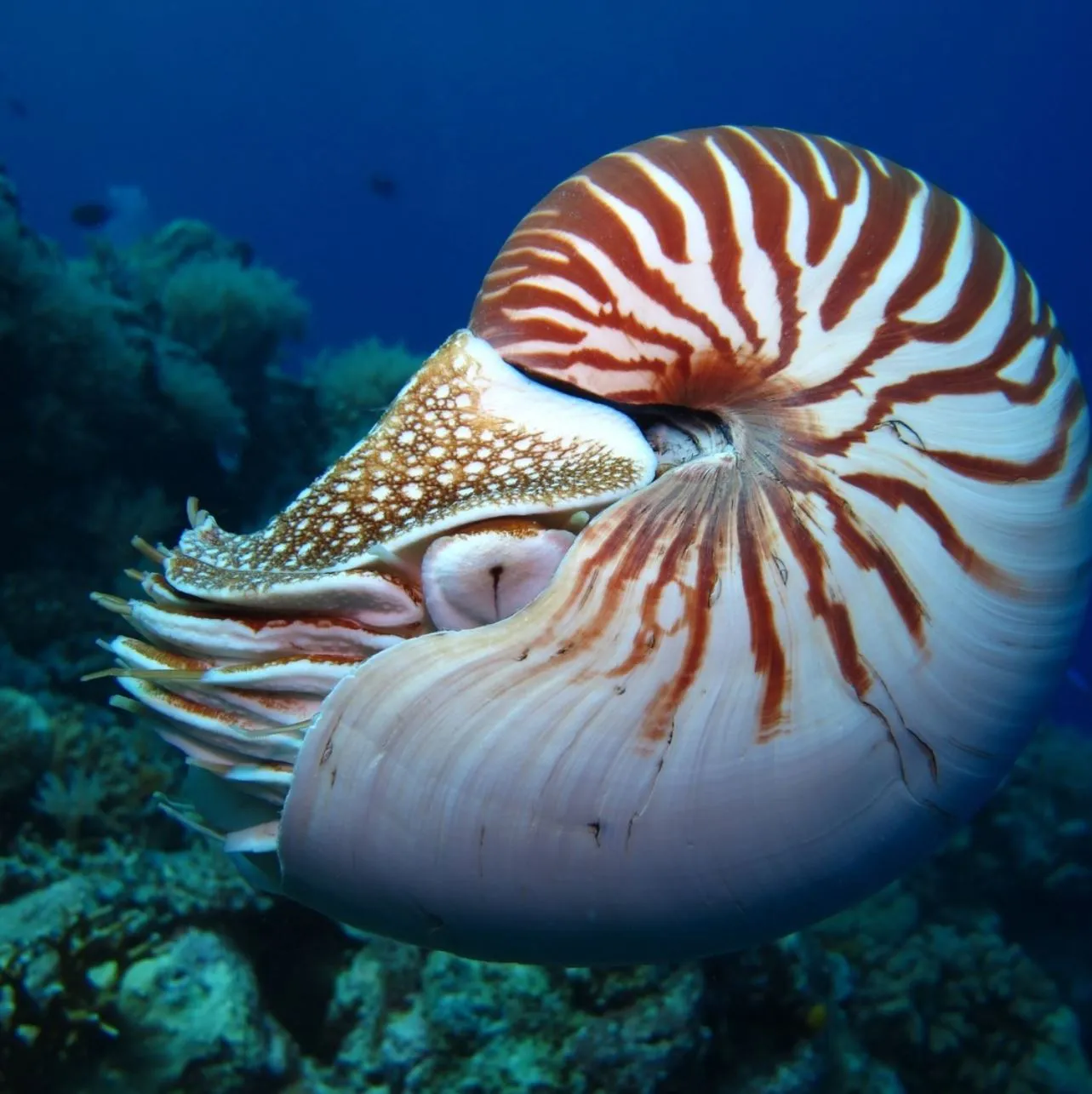
If anything deserves a golden ticket for ‘rarest of the rare’, then it’s the Chambered Nautilus – a living fossil that’s been kicking around longer than most of the marine life we see today. These deep-water bivalve molluscs base themselves way below what most scuba divers would even dare to go to – only occasionally popping up under the cover of darkness to get some air.
Some footage from Schmidt Ocean Institute that I love showing off is the deep-sea coral gardens and nautiluses drifting past dark forests of black coral, like tiny, slow-moving submersibles. You won’t get that view unless you’re doing some serious blackwater diving with a team that actually knows what they’re doing.
And even then, the nautilus gets to decide if you’re worthy of a glimpse of it.
The Dugong — The Shy Lawnmower Of The Coral Sea
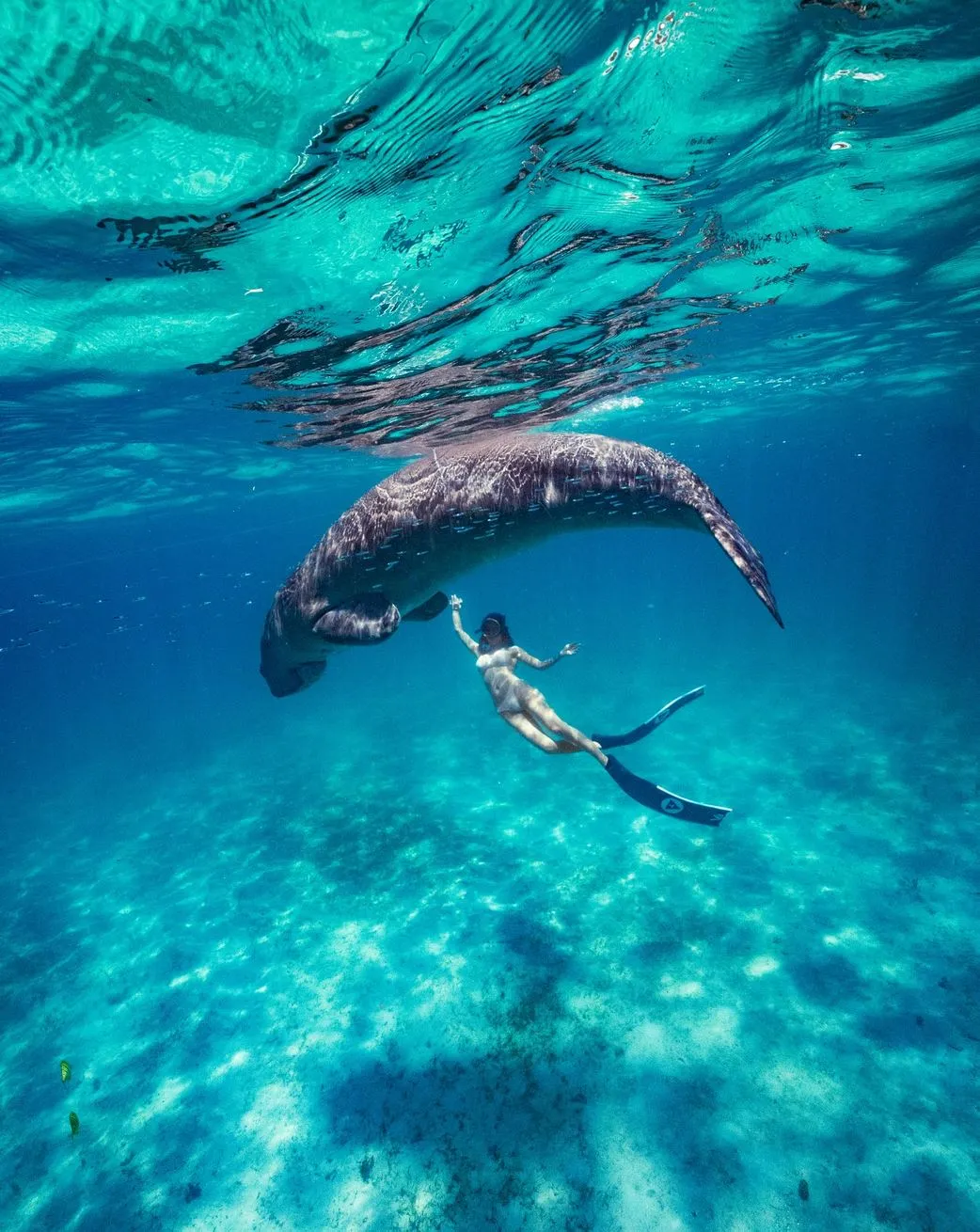
Dugongs are near and dear to a lot of people in Queensland, but they’re also super easily spooked. Get a bit too close, and you’ll just catch a glimpse of a tail disappearing into the depths – that’s it. They spend most of their time in the feeding grounds that stretch from Raine Island right out into the inshore waters of the Coral Sea. There’s a lot of important work being done by those Blue Carbon seagrass beds – we can’t underestimate the ecological role they play.
If you’re lucky enough to catch a glimpse of one while paddling quietly around Cape Tribulation or the Whitsundays, then count yourself lucky – that moment is one to treasure. Those reef guides know the drill – keep it quiet, keep it low-key and try not to scare the bejeesus out of it.
Hawksbill Turtles
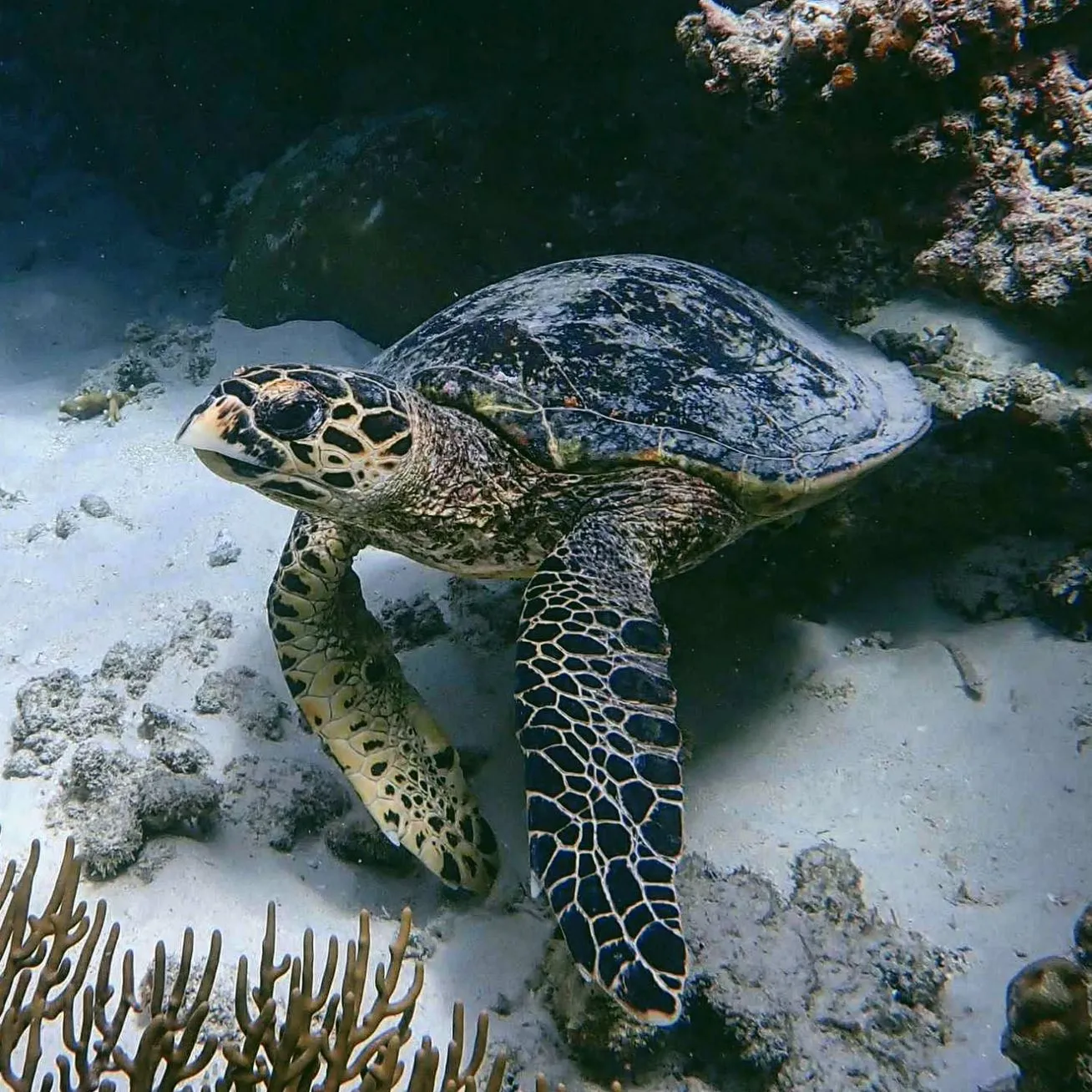
Everyone loves sea turtles, and the Hawksbill Turtles is perhaps the one species that pops into most people’s minds when they think of coral reefs. You can spot them hanging around bommies that happen to be home to Giant Clams, Queensland Grouper, some midwater jellyfish and schools of reef fish. But the reality is that these turtles are critically endangered, and their numbers are affected by mass bleaching events in a pretty big way.
Researchers from James Cook University often keep a close eye on Hawksbill distribution during the bleaching years – and the numbers are pretty sobering. They rely so heavily on these symbiotic relationships within healthy coral communities that they are particularly vulnerable to ocean warming.
Spotting one is a treat, but it’s not exactly a guarantee.
The Ornate Ghost Pipefish — Nature’s Master Of Disguise
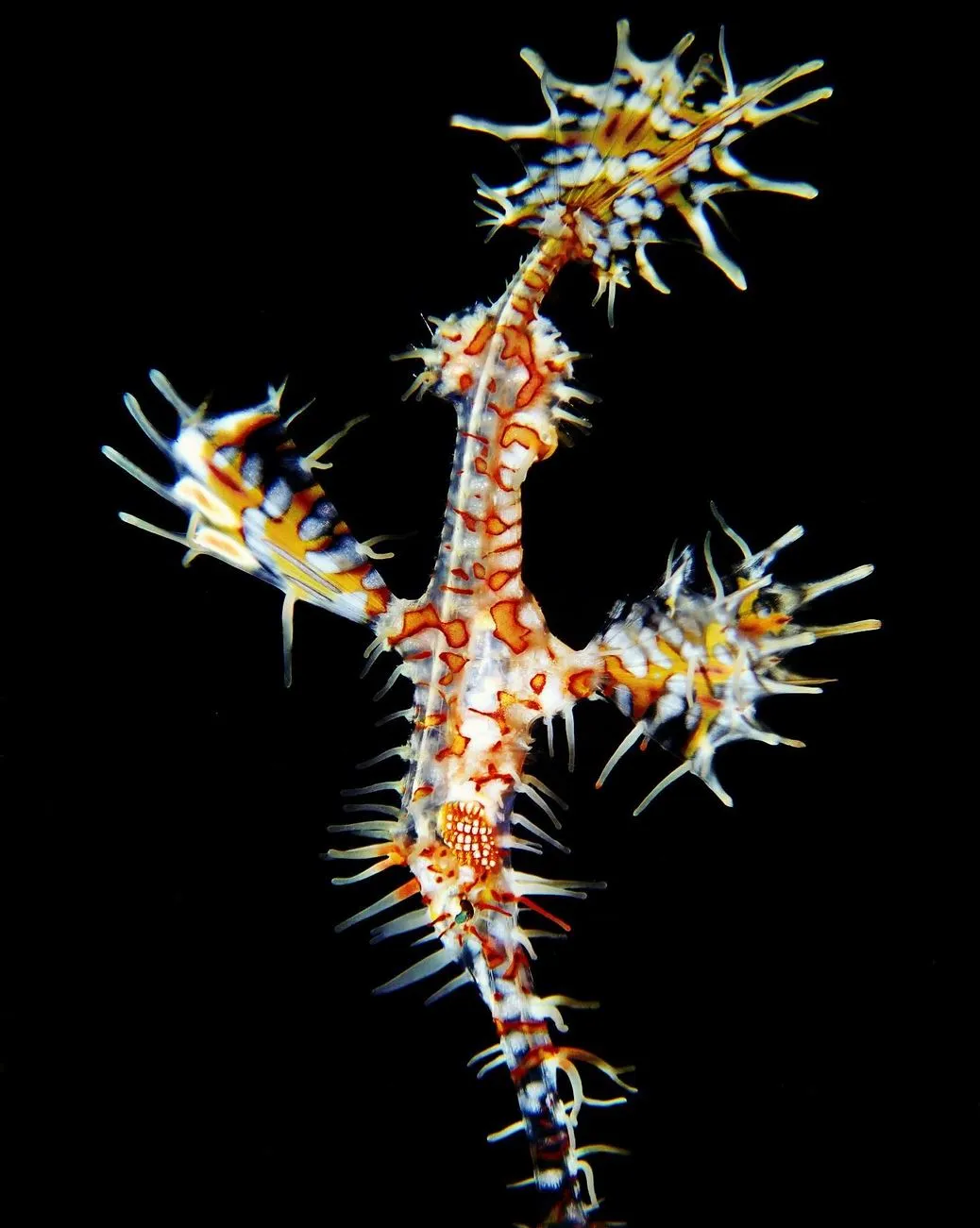
You’ll be spotting these tiny critters drifting upside-down near feather stars, scorpion fish, or tucked into the nooks and crannies of branching coral. I recall a Master Reef Guide pointing out three of ’em that looked just like bits of algae bobbing up and down in the waves – I mean, it was uncanny.
If you’re out on the water with Wavelength Reef Charters, stick close to your guide. They know the secret spots in the Coral Sea like the back of their hand, especially around Opal Reef and the canyons north of Port Douglas.
This is where paying attention really pays off. You blink, and it’s gone.
Manta Encounters — From Giants To Ghost Morphs
Loads of visitors are after a glimpse of a Reef Manta Ray, but if you’re chasing the whole rare experience, keep an eye out for the melanistic manta or the ornate eagle ray. These happen to appear out of nowhere, usually in the outer reef, where the plankton’s floating by like confetti.
And then there’s the real wild card: the Blanket octopus. I mean, these guys are like nothing else – local legend Jacinta Shackleton captured some pretty mind-boggling footage near Lady Elliot Island, but I’ve yet to meet a single reef guide who’s seen one twice.
And of course, there are the big guys – Whale Sharks, Dwarf Minke Whales, Humpback whales – great to see when they turn up, but no promises whatsoever.
How Weather, Tides, And Seasons Change Your Odds
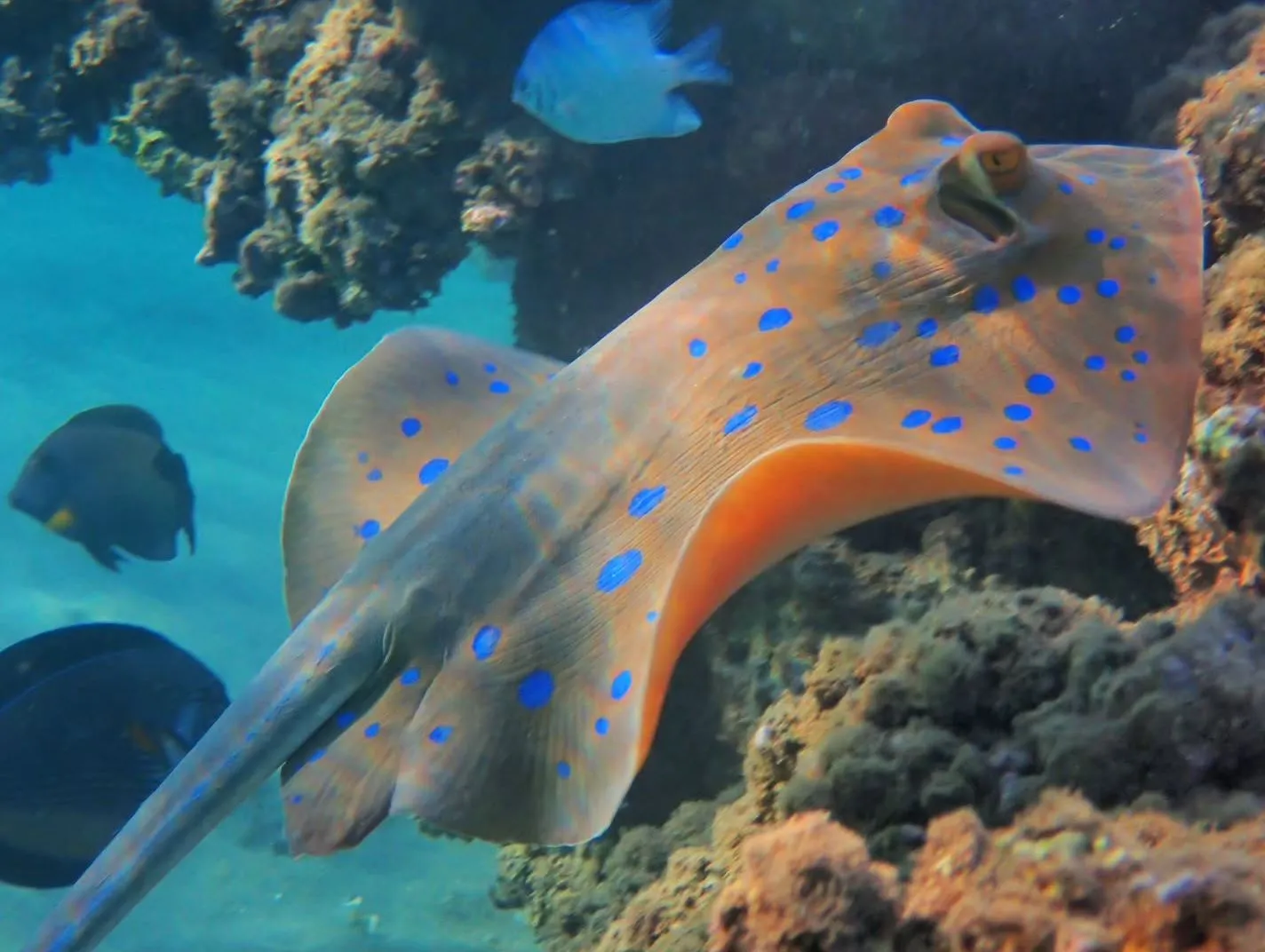
A rare sighting needs a lot of stars to align – the Coral Sea, the winds, the tides, and even the marine life itself. And if you happen to get caught up in a coral bleaching year or a crown-of-thorns starfish spike, forget about it.
Wet Season (November to April)
- Minke and humpback whales are showing up more frequently
- Forget about clear water, with all the runoff around
- Coral bleaching risk is way up
- Blue bottles are all over the exposed beaches
Dry Season (May to October)
- The water’s as clear as can be
- More mantas hanging out in channels
- Perfect time for spotting a few of the reef sharks cruising the outer walls
Tidal Tips
- Incoming tide = clear as a bell
- Slack tide = the best time for spotting the tiny critters
- Outgoing tide = murky, but you never know what you might find
As the reef guides will tell you: “The ocean doesn’t read your itinerary – you gotta be on its terms.”
Local Tips I’ve Learnt After Decades On The Water
- Good sightings are more about having the proper technique than just being in the right place at the right time.
- Take it slow – don’t thrash about in the water, it’ll spook even the rarest of marine species.
- Keep an eye out for the dark shadows on the bommies; that’s where you’ll find scorpionfish, oarfish juveniles, and the odd ornate ghost pipefish hiding out.
- Get yourself a guide who’s been trained by the Master Reef Guide network – at least then you’ll be in good hands.
- If you do decide to hire a digital underwater camera, don’t forget to bring a spare SD card – you never know when you’ll need to capture a fleeting moment, and these creatures don’t hang around.
- Don’t bother ignoring the drop-offs – that’s where you’ll find the likes of potato cod and Queensland groupers swimming around.
- Remember to be respectful of the indigenous history and traditional owner guidance in all marine park zones – it’s not just about having a good time, it’s about preserving the reef for everyone to enjoy.
- And don’t even think about chasing after manta rays – they’ll vanish like smoke in your hand.
And if you want to get out on the reef with a crew that actually knows what you’re doing, then check out Great Barrier Reef Tours – they’ve got the best guides who’ve spent their lives navigating these waters.
FAQ
How do I get a decent look at some rare marine life?
Follow the lead of the experienced reef guides, pick some of the more remote coral sea sites, try to get out there early, and don’t be a jerk in the water – all that noise and splashing is bound to send them packing.
Do big deep-water fish like oarfish actually live in the reef?
Well, yes and no – some of the youngsters do drift through midwater, but you’d be lucky to catch a glimpse of one.
Has coral bleaching wiped out many of the rare species?
Yeah, it’s had a pretty devastating effect – it’s churning up the symbiotic relationships between coral and the rest of the reef, so some species – especially turtles and those tiny little fish that like to hide – have been forced out of their homes.
Can I film some of the rare species on a rental camera?
Yup – most operators will let you hire a digital underwater camera that’s capable of shooting 1080 HD video and taking some pretty high-res snaps – just don’t forget to bring a spare SD card, you never know when you’ll need one.
Are whales actually a rare sight on the reef?
Well, not really – minke and humpback whales come through seasonally and are pretty spectacular when they do, but they’re not exactly hard to find – just be prepared for the unpredictable nature of the ocean.